Solar Film For HDB Windows In Singapore
A Practical Guide For Cooler, More Comfortable Homes
Singapore heat is no joke. In many flats, the afternoon sun turns living rooms and bedrooms into warm, glaring spaces. Solar film for HDB windows is one of the most overlooked upgrades that can make a home feel noticeably more comfortable.
With over 80% of Singaporeans living in HDB flats, it is no surprise that BTO key collection and resale renovation plans often focus on carpentry, flooring, and aircon first. Windows usually get attention only after move-in, when the west sun hits hard.
This guide explains what solar film for HDB windows is, how it differs from HDB window tint, and what to look for before you commit.
What Is Solar Film For HDB Windows?
Solar film for HDB windows is a high-performance window film applied onto existing glass to reduce heat, block UV, and control glare without heavily darkening your home.
It is designed for comfort and protection first, not just for a tinted look.
How Ceramic Solar Film Works
Most modern performance-focused residential films are ceramic film. Instead of relying on dark dye to shade the room, ceramic films are engineered to reject solar energy while keeping visibility relatively clear.
In practical terms, ceramic solar film helps with:
- Heat reduction by cutting down solar energy entering through glass
- UV protection to reduce fading of floors, curtains, and furniture
- Glare control for TVs, monitors, and brighter daytime rooms
Solar Film For HDB Windows Vs HDB Window Tint
Solar film for HDB windows and HDB window tint are often mixed up, but they are not the same product category and should not be treated as interchangeable.
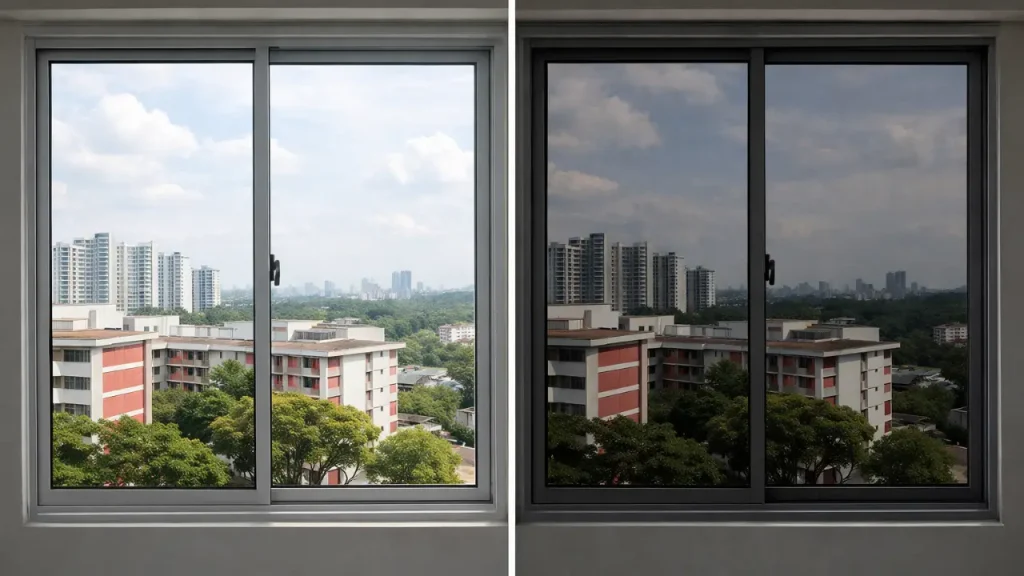
HDB window tint typically refers to basic tinted films that focus on darkening for privacy and glare reduction, with more limited heat control. Solar film for HDB windows, especially ceramic film, is engineered for stronger heat rejection and UV protection while keeping the home bright and livable.
If you are comparing both and still feel unsure which fits your unit better, you can call or WhatsApp StickyWorks and share your sun direction and flat type. A quick chat usually clarifies what is worth paying for.
Key Differences That Matter In Singapore
Technology And Materials
- Solar film for HDB windows: Often ceramic-based, built for heat rejection and UV protection
- HDB window tint: Commonly dyed or basic tinted films designed mainly for privacy and visual shading
Heat Rejection And Indoor Comfort
- Solar film for HDB windows: Better suited for Singapore heat because it targets solar energy entering through glass
- HDB window tint: Can reduce glare, but may not deliver the same level of heat reduction
UV Protection
- Solar film for HDB windows: Typically provides stronger UV protection to help slow fading over time
- HDB window tint: Performance varies by product, and some focus more on darkening than UV control
Durability Over Time
- Solar film for HDB windows: Quality ceramic film generally holds performance better with less risk of discolouration
- HDB window tint: Lower-grade tinted films can fade or shift tone over time under strong sun exposure
When HDB Window Tint Can Still Make Sense
There are situations where HDB window tint can be sufficient. For example, if your main goal is daytime privacy for a low-floor unit, or you want a darker look and you are less focused on heat reduction.
But for most HDB households trying to improve day-to-day comfort in Singapore’s climate, solar film for HDB windows is usually the better long-term choice because it addresses the bigger pain point: heat build-up from sun-facing glass.
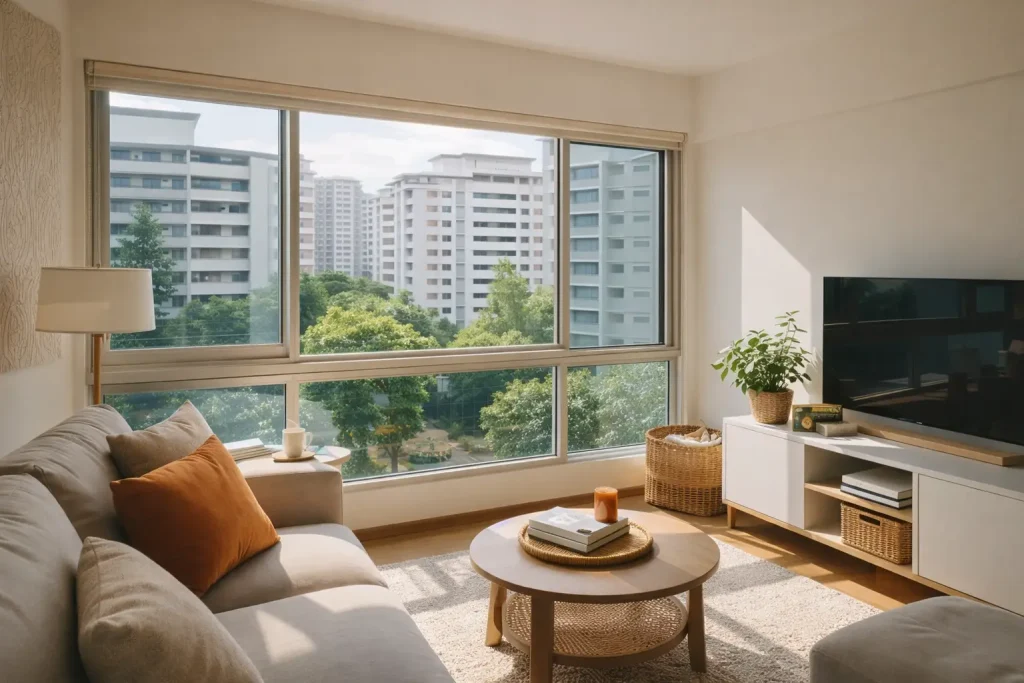
Why Solar Film For HDB Windows Matters In Singapore
Window upgrades rarely make it to the top of a renovation checklist until you live with the problem. Once you do, it becomes obvious why solar film is such a practical, low-disruption improvement.
Heat Reduction In Sun-Facing Rooms
West-facing rooms can feel especially intense from late afternoon into early evening. Solar film helps reduce the amount of heat entering through glass, so rooms feel more usable before you even turn on the aircon.
UV Protection For Renovation Finishes
Sun exposure can contribute to fading and long-term wear on:
- Vinyl flooring and laminates
- Curtains and blinds
- Fabric sofas and cushions
- Wood surfaces near windows
For BTO renovation finishes that are still new, UV protection helps keep the home looking newer for longer. For resale HDB renovation projects, it protects refreshed interiors and new furnishings.
Glare Control For Screens And Daily Living
Glare is often the first improvement homeowners notice. If you work from home near a window, or your TV faces bright daylight, glare control can make the space feel calmer and easier on the eyes.
Energy Efficiency Support
Solar film does not eliminate the need for aircon, but it can reduce heat gain. That helps rooms cool down more easily, especially during the hottest parts of the day.
When Should You Install Solar Film For HDB Windows?
You can install solar film for HDB windows at different stages, depending on your renovation timeline and how quickly you want relief from heat and glare.
During BTO Renovation
For BTO owners, a common approach is to install after major dusty works and after a proper cleaning is done. It is an easy add-on that does not interfere with carpentry or flooring.
During Resale HDB Renovation
Resale flats sometimes come with older tinted films, residue, or inconsistent shading between rooms. Renovation is a good time to remove outdated films and install a ceramic solar film that matches your layout, privacy needs, and sun direction.
After Moving In If Heat Issues Show Up
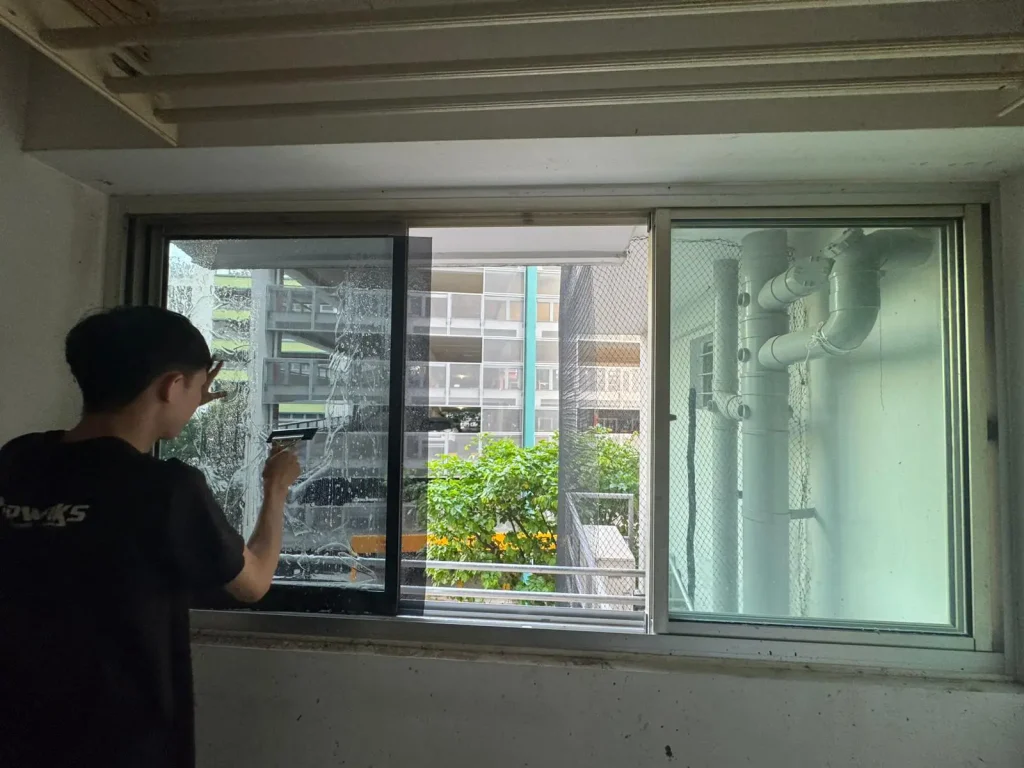
Many homeowners only feel the real sun exposure after moving in. The good news is installation is usually quick. In many HDB units, it can be completed in a single morning or afternoon, depending on the number of windows.
This is where professional workmanship matters. StickyWorks uses 3M certified installers, which helps ensure clean finishing, proper fitting on sliding panels, and a result that looks neat up close.
If you have already moved in and want to check how quick the process will be, just WhatsApp StickyWorks and ask. Most people overestimate the inconvenience.
What To Look For In Solar Film For HDB Windows
Not all films perform the same. If you are comparing options, focus on these practical factors rather than choosing purely based on how dark the film looks.
Ceramic Composition
If heat reduction and clarity matter, ceramic film is a strong starting point. It is designed to reject heat without turning your home into a dim space.
Heat Rejection Performance
Ask for clear performance specs and recommendations based on your unit’s sun direction. West sun and afternoon glare often require a different approach than morning sun exposure.
UV Rejection Percentage
UV protection is one of the best reasons to install solar film for HDB windows. A good installer should be able to explain UV rejection figures and what they mean for interior protection.
Professional Installation Quality
Even a high-quality film can look poor if installation is rushed. Clean glass prep, correct alignment, and tidy edges matter, especially for HDB sliding windows and fixed panes.
If you want a second opinion on which film suits your flat, StickyWorks can advise based on your layout and what you care about most, whether it is heat reduction, glare control, or privacy.
Getting The Right Solar Film Starts With Proper Measurement
Every HDB stack is different. A high-floor unit with strong west sun faces a different comfort issue from a low-floor unit focused on privacy. That is why a meaningful recommendation and quotation for solar film for HDB windows should be based on on-site measurement and a quick assessment of your needs.
StickyWorks can arrange an on-site measurement, recommend suitable ceramic film options, and provide an accurate quotation based on your actual windows.
If you are planning renovation or already feeling the heat at home, call or WhatsApp StickyWorks to schedule a measurement and quotation.
FAQ: Solar Film For HDB Windows
1) Is solar film for HDB windows worth installing for a BTO flat?
It is often worth considering early, especially for stacks that get strong afternoon sun. It is a practical comfort upgrade that also adds UV protection for new renovation finishes.
2) What is the difference between solar film for HDB windows and HDB window tint?
Solar film for HDB windows focuses on heat reduction and UV protection, commonly using ceramic film technology. HDB window tint typically focuses on darkening for privacy and glare reduction, with more basic heat control.
3) How long does it take to install solar film for HDB windows?
Many HDB installations can be completed in one morning or one afternoon, depending on how many windows are being treated and the window configuration.
4) Will solar film make my home look too dark from inside?
Not necessarily. Many ceramic solar films are designed to control heat and glare while keeping the home bright. The right choice depends on your privacy needs and sun direction.
5) Do I need on-site measurement before getting a quotation?
Yes, it is strongly recommended. Window sizes, sliding panels, and sun exposure affect film choice and pricing. An on-site check leads to a more accurate quotation and a better match to your needs.