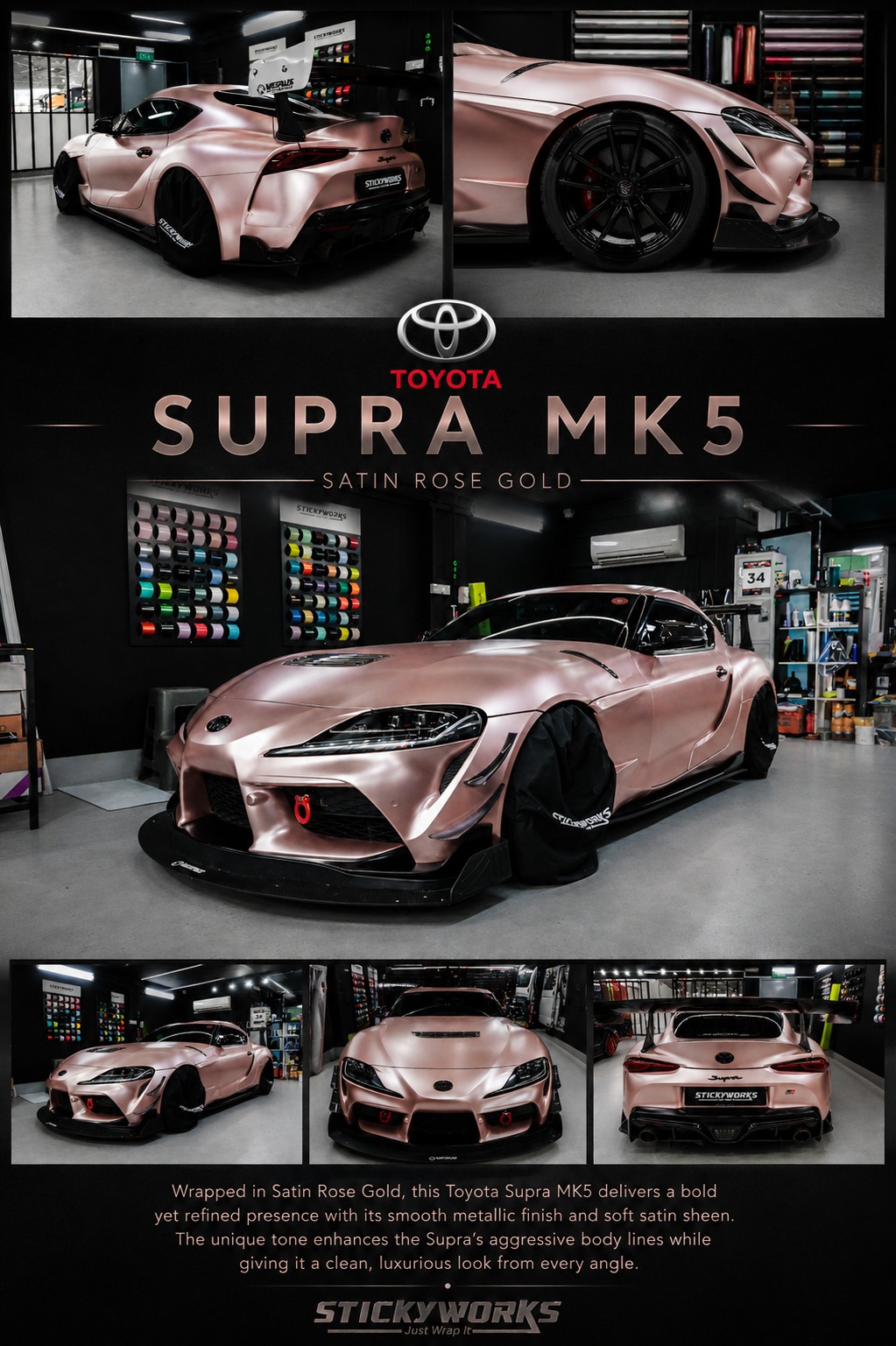
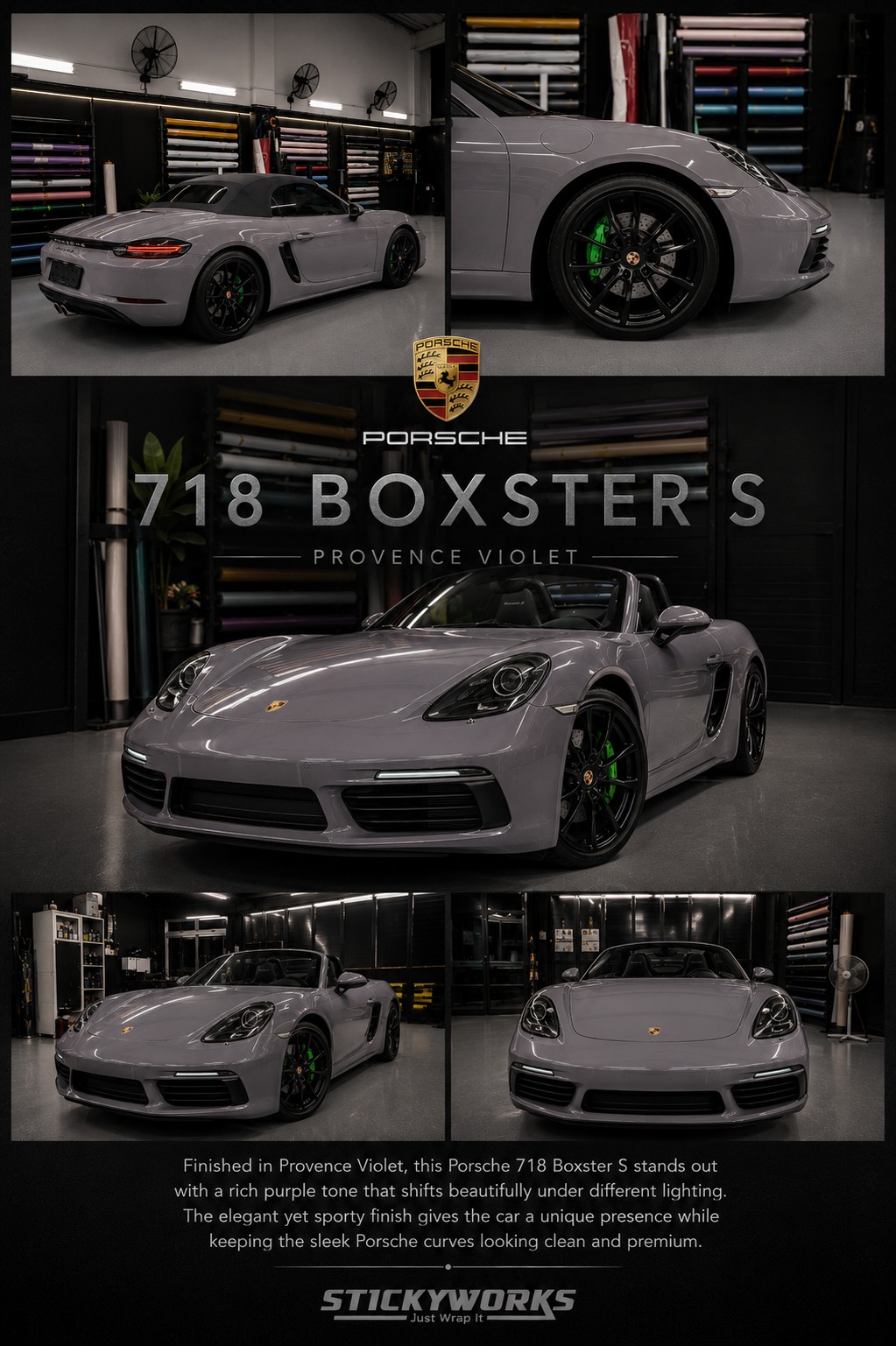
Car Wrap vs PPF in Singapore: Which Does Your Car Need?
You want your car to look good and stay that way. Then you come across two films that sound almost the same: car wrap and PPF.
Both go over your paint. Both promise some protection. So the car wrap vs PPF question really comes down to one thing: do you want to change how your car looks, or keep it exactly as it is?
This guide explains what each film is built for, where each one falls short, and three Singapore checks most owners forget once a wrap changes their car’s colour.
Car Wrap vs PPF: The Short Answer
A car wrap is a coloured or textured vinyl film that gives your car a new look and adds a layer over the paint. PPF (paint protection film) is a clear film that keeps your car looking the same while taking stone chips and light scratches. Want a new look? Wrap. Want to keep the look you have? PPF.
What Each Film Is Built to Do
Car wrap: a new look, with a protective layer

A car wrap covers your car’s painted surfaces in vinyl film. It changes the colour or finish without a permanent respray, and you can choose from gloss, matte, satin, metallic and colour-shift finishes.
Protection is a useful side benefit. The vinyl adds a layer against UV exposure, light scratches and road grime. At Stickyworks, we work with vinyl from Avery Dennison, 3M, Oracal, KPMF and HEXIS.
PPF: the same look, with an impact layer

PPF is a clear, virtually invisible film. Its job is to be the surface that takes the damage, so stone chips and scuffs land on the film instead of your factory paint.
Certain premium PPF films also have a self-healing top coat. Fine swirls on these films can soften with heat from sunlight or warm water. Not every film has this, so check before you choose.
PPF vs Vinyl Wrap at a Glance
| Comparison | Car wrap | PPF |
|---|---|---|
| Main job | Change how your car looks | Protect how your car already looks |
| Appearance | New colour, texture or finish | Clear; your original colour stays |
| Coverage | Full car, or selected parts and trims | Single panels, full front or full body |
| Protection | A layer against UV, light scratches and road grime | Built to take stone chips, light scratches and contaminants |
| LTA colour record | May need updating if the main colour changes | No change, since the colour stays the same |
Where Each Film Falls Short
No film does everything. When you weigh paint protection film vs wrap, knowing the limits upfront saves you from paying for the wrong one.
The limits of a car wrap
- Protection is secondary. If chip resistance on your bonnet and bumper is your main worry, PPF is the film designed for that job.
- It changes your car’s colour. That is the point, but it also brings paperwork. See the Singapore checks below.
The limits of PPF
- It cannot change your car’s look. It is transparent by design.
- It does not stop everything. Deep scratches, gouges, collisions and kerb strikes can still damage the paint.
- It only protects what it covers. Panels left bare get no protection.
- It does not fix existing damage. PPF goes over your current paint, so older cars need their paint assessed first.
- It is not invisible in every light. Results vary with lighting, viewing angle and the film used.
Which One Suits You?
Match your situation to the film built for it:
- New car, or freshly resprayed, and you love the colour: PPF keeps that finish looking newer for longer.
- Paint looks faded or tired: a car wrap gives you a fresh look without a respray.
- You want a colour or finish your car never came in, like satin or colour shift: car wrap.
- You drive the expressways daily and worry about chips: PPF on the bonnet, bumper, fenders and mirrors.
- You only want to change details, such as a blacked-out grille, window sills or mirror caps: vinyl detailing is the smaller job.
- Your car is a business vehicle: a commercial vehicle wrap turns it into advertising.

Changing Your Car’s Colour in Singapore: 3 Checks Before You Wrap
This part only applies to wraps. PPF is clear, so your car’s colour on record stays correct.
1. Update your colour with LTA
LTA has said there are no restrictions on car colours, but owners who change colour should update their vehicle’s details on OneMotoring. LTA’s online services include a Change of Vehicle Colour transaction for this.
If your wrap changes your car’s main colour, treat it as a colour change. If you are unsure whether yours counts, check with LTA directly before your car goes on the road.
2. Keep your lights clear
LTA lists the tinting or masking of headlamps, stop lamps and signal lamps as a modification that is not allowed. A colour wrap should stop at the edges of your lights. Illegal modifications can mean fines of up to $20,000 for individuals.
3. Tell your insurer
LTA notes that modifying your car may affect your insurance. The General Insurance Association of Singapore advises telling your motor insurer about modifications, as undeclared ones can lead to declined claims. Ask your insurer whether your wrap needs declaring.
FAQ: Car Wrap vs PPF
1.) Is PPF the same as a vinyl wrap?
No. A vinyl wrap changes your car’s colour or finish. PPF is clear and keeps your original paint visible while taking chips and light scratches on the panels it covers.
5.) Does a car wrap protect against stone chips as well as PPF?
Not to the same degree. A car wrap adds a layer that helps against minor scratches and stone chips, but its main job is changing how your car looks. PPF is built to take impacts on the panels it covers, so it is the better choice if chips are your main worry.
2.) Do I need to tell LTA if I wrap my car?
If the wrap changes your car’s main colour, update your vehicle’s colour on OneMotoring. LTA has said colour changes are not restricted, but your records should match your car. If in doubt, check with LTA.
6.) I just bought a new car. Should I get a wrap or PPF?
If you like the factory colour, PPF is the usual choice. Many owners fit it soon after buying to keep fresh paint looking newer for longer. If you want a different colour or finish from day one, a car wrap gives you that and still adds a layer over the new paint.
3.) Can I wrap my headlights or tail lights?
Not with colour film. LTA does not allow the tinting or masking of headlamps, stop lamps or signal lamps, as it can affect how they work. Keep wraps to the bodywork and trims.
7.) Will a wrap or PPF hide paint damage I already have?
PPF will not, because it is clear and goes over your current paint, so existing chips stay visible. A car wrap can make small imperfections less noticeable, but neither film repairs damage. It is worth having your paint checked before any film goes on.
4.) Does a car wrap affect my car insurance?
It can. LTA notes that modifications may affect your cover, and the General Insurance Association of Singapore advises telling your insurer. Check with your insurer before or right after your wrap goes on.
8.) Can a car wrap go on my windows?
Any film on your car’s glass must meet LTA’s tinted film rules. It must be non-reflective, let at least 70% of light through the front windscreen and front side windows, and let at least 25% through the rear windscreen and rear side windows. Opaque colour vinyl cannot meet these limits, so for glass, look at window tinting instead.
Not Sure Which Film Fits Your Car?
Stickyworks fits both films at our workshop at Autobay @ Kaki Bukit. See what a full colour change involves on our car wrap service page, or read how clear protection works on our paint protection film page.